
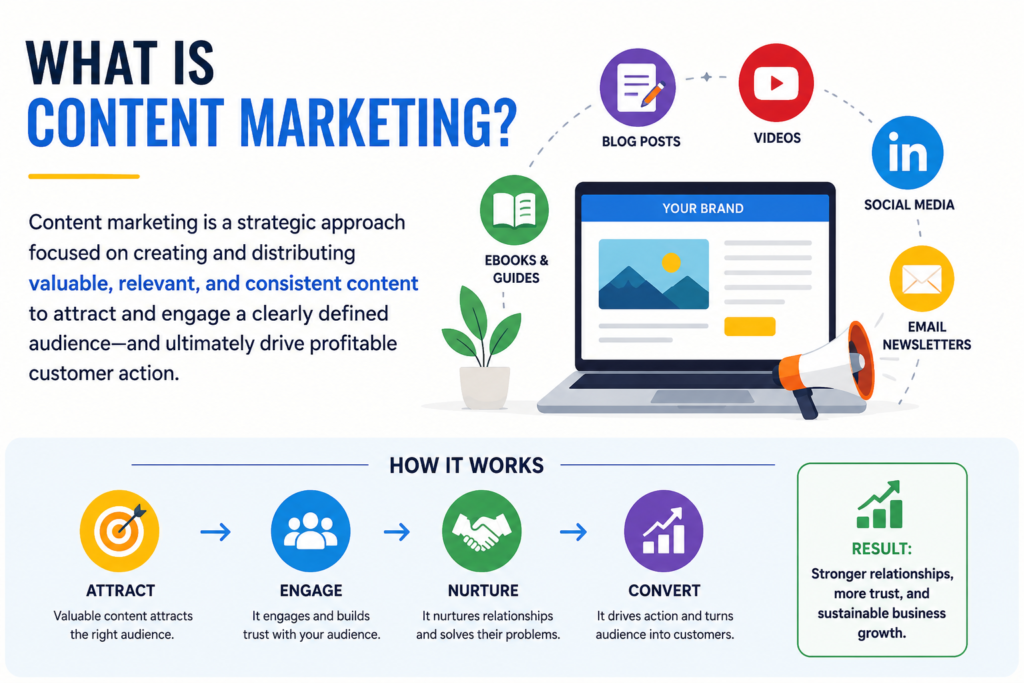
Content marketing is a marketing strategy focused on creating and sharing valuable, relevant content that attracts, educates, and engages your target audience. Instead of directly promoting your products or services, you provide useful information that helps potential customers solve problems or make decisions
Examples of Content Marketing
- Blog articles
- Videos and tutorials
- Social media posts
- Email newsletters
- Podcasts
- Case studies
- Infographics
- E-books and guides
- Webinars
How Content Marketing Helps Your Business
1. Increases Brand Awareness
When you publish helpful content, more people discover your business through search engines, social media, and referrals.
Example: A landscaping company publishes articles on lawn care tips, helping local homeowners find them online.
2. Builds Trust and Credibility
Customers are more likely to buy from businesses they view as knowledgeable and trustworthy.
Example: A financial advisor shares educational content about retirement planning, demonstrating expertise.
3. Improves Search Engine Rankings (SEO)
High-quality content helps your website rank higher on search engines, bringing in organic traffic without paying for every click.
4. Generates Leads
Content can encourage visitors to sign up for newsletters, request quotes, book consultations, or download resources.
Example: A software company offers a free guide in exchange for an email address.
5. Supports the Sales Process
Content answers common questions and addresses concerns before prospects speak with your sales team, making it easier to convert them into customers.
6. Creates Long-Term Marketing Value
Unlike many paid ads that stop working when the budget ends, good content can continue attracting customers for months or years.
A Simple Content Marketing Funnel
- Awareness: Blog posts, videos, social media content
- Consideration: Case studies, comparison guides, webinars
- Decision: Product demos, testimonials, free consultations
Getting Started
- Identify your ideal customer.
- Research their questions and challenges.
- Create content that addresses those needs.
- Publish consistently.
- Measure results (traffic, leads, sales, engagement).
- Refine your strategy based on performance.
Example ROI
Imagine you own a plumbing business:
- You publish articles like “How to Fix a Running Toilet” and “Signs You Need a Water Heater Replacement.”
- Homeowners find these articles through search engines.
- Some readers contact you when they need professional help.
- Over time, your website becomes a steady source of leads.
